In the early hours of August 16 Beijing time, Great Wall Motor's Brazil plant was officially completed and put into operation. Brazilian President Lula, Vice President Alckmin, Chinese Ambassador to Brazil Zhu Qingqiao, Brazil's Minister of Labor and other political figures, as well as Great Wall Motor President Mu Feng, Great Wall International President Shi Qingke, and Great Wall Motor Brazil-Mexico Region President Zhang Gengshen and other guests jointly witnessed this important moment. President Lula personally signed the first vehicle rolled off the line at Great Wall Motor's Brazil plant—the Haval H6 GT. This milestone event not only represents the in-depth advancement of Great Wall Motor's globalization strategy in the Latin American market, but also serves as a model for the high-quality overseas expansion of China's automotive industry, vividly illustrating the innovative practice of deep integration of the China-Brazil automotive industrial chains.
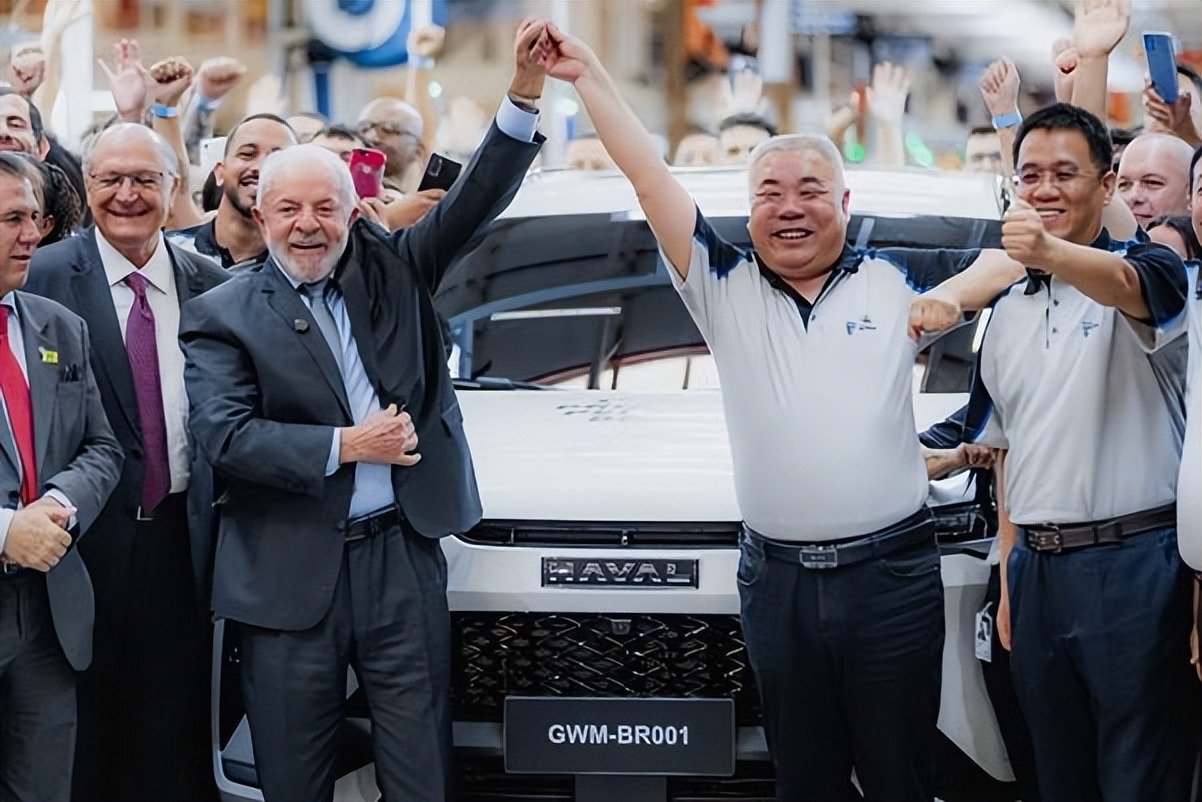
Brazilian President Lula witnesses the completion and commissioning of Great Wall Motor's Brazil plant

Brazilian President Lula signs the first vehicle rolled off the line at the Brazil plant—the Haval H6 GT
Anchoring Latin America with Intelligent Manufacturing: Brazil Plant Becomes a Strategic Hub
Great Wall Motor's Brazil plant is located in Iracemápolis, São Paulo State. Acquired from the Daimler Group, the plant has been transformed and upgraded into an intelligent production base. As Great Wall Motor's third-largest overseas full-process vehicle manufacturing center, the plant carries the core mission of radiating across the Latin American market and serves as a key hub connecting the Eurasian, Southeast Asian, and Latin American markets. Great Wall Motor President Mu Feng stated: "The Brazil plant is Great Wall Motor's strategic fulcrum in Latin America. With Brazil as the center, it radiates to markets including Mexico, Argentina, and Chile, shortening delivery cycles and enhancing localized service capabilities."
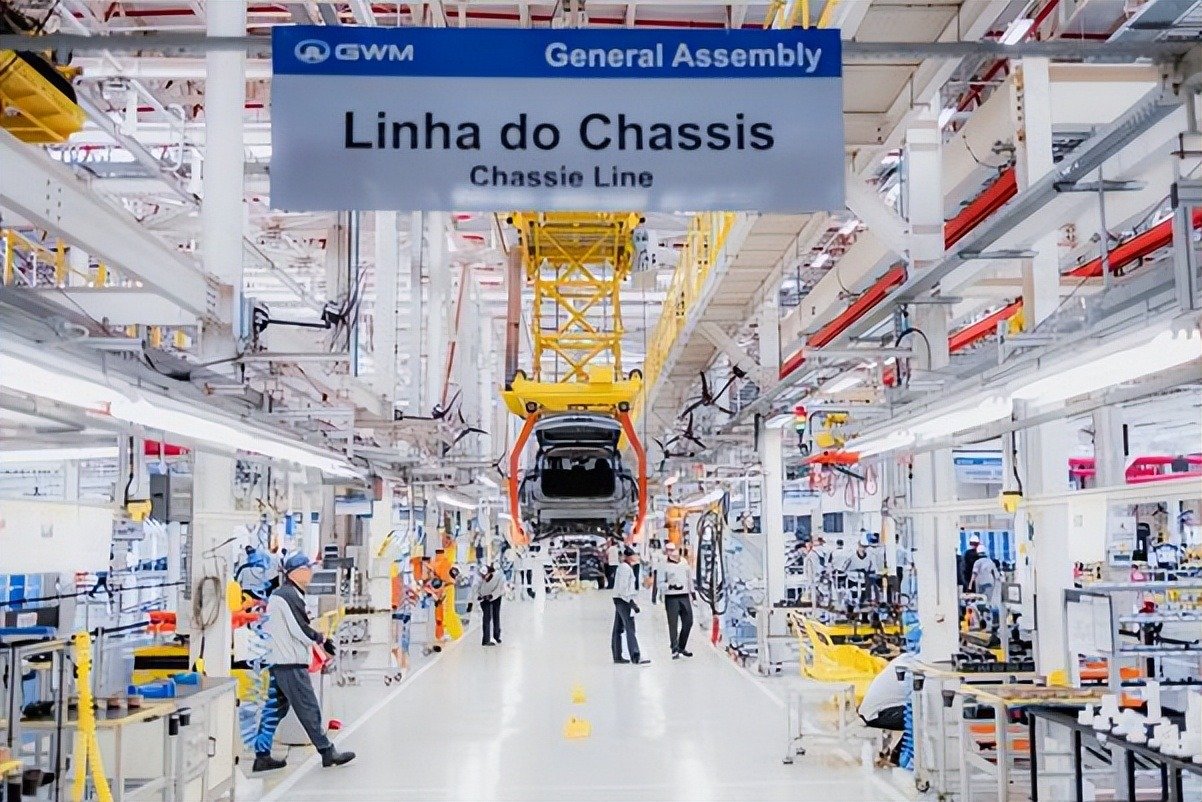
Great Wall Motor's Brazil plant
Great Wall Motor's Brazil plant covers a total area of 1.2 million square meters, with a building area of 94,000 square meters. It has core process workshops including welding, painting (including robotic applications), and final assembly, as well as comprehensive equipment, energy supply systems, and an efficient logistics supply chain. Its annual production capacity is 50,000 vehicles. After production begins, it will initially produce main models including the Haval H6 series, Haval H9, and the 2.4T GWM Poer. As an important industrial town in Brazil, São Paulo State enjoys convenient transportation and mature supporting facilities, with a large concentration of automotive parts suppliers. The mature "four-hour logistics circle" system provides solid guarantees for the efficient operation of the plant.
While consolidating its production foundation, Great Wall Motor is integrating into Brazilian society through deep localized operations. Through a series of cultural integration initiatives, Great Wall Motor has deeply integrated into Brazil's local cultural ecosystem. On the basis of respecting local customs, Great Wall Motor not only promotes China-Brazil cultural exchange and mutual learning, but also builds a bridge for two-way cultural dialogue, making Great Wall Motor a true bond connecting the peoples of the two countries. This is precisely the vivid practice of the concept of "localized brand operation."
From Product Export to Ecosystem Empowerment: The Paradigm Upgrade of Great Wall Motor's Globalization Strategy
The completion and commissioning of the Brazil plant is not simply an overseas deployment, but a key anchor of Great Wall Motor's "ecosystem going global" model under its globalization strategy. Since embarking on its overseas journey in 1997, as one of China's first batch of automakers to "go global," Great Wall Motor has completed its transformation from single-product exports to full value chain overseas expansion covering "R&D, production, supply, sales, and service." Today, Great Wall Motor has more than 1,400 overseas sales channels, with products sold in over 170 countries and regions, and cumulative sales exceeding 2 million vehicles. In addition to its three major full-process vehicle production bases, it also operates multiple KD plants in Ecuador, Pakistan, and other locations.
Brazilian President Lula takes a group photo with the Great Wall Motor Brazil team
What supports this leap is the in-depth implementation of Great Wall Motor's "New International Four Modernizations" strategy—building a solid foundation with localized production capacity, integrating into the market through localized operations, breaking down barriers through cross-cultural branding, and resisting risks through supply chain security. Under this framework, Great Wall Motor has achieved a global layout of a full-category, full-powertrain, full-tier product matrix, advancing toward becoming a global leader. According to previous reports by CCTV Finance, Chinese automakers have already captured 70% to 80% of Brazil's new energy vehicle market share. With advanced technological strength and successful localized operations, Great Wall Motor has become a major force in this market.
Since entering the Brazilian market, Great Wall Motor's performance has steadily climbed: achieving annual sales of 29,000 vehicles within three years; in the first half of 2025, sales exceeded 15,700 vehicles, a year-on-year increase of 19.8%, surpassing the industry average by 17 percentage points. These impressive results have laid a solid foundation for the Brazil plant's production launch and also mark Great Wall Motor's completion of its strategic transformation from pure product exports to deep localization.
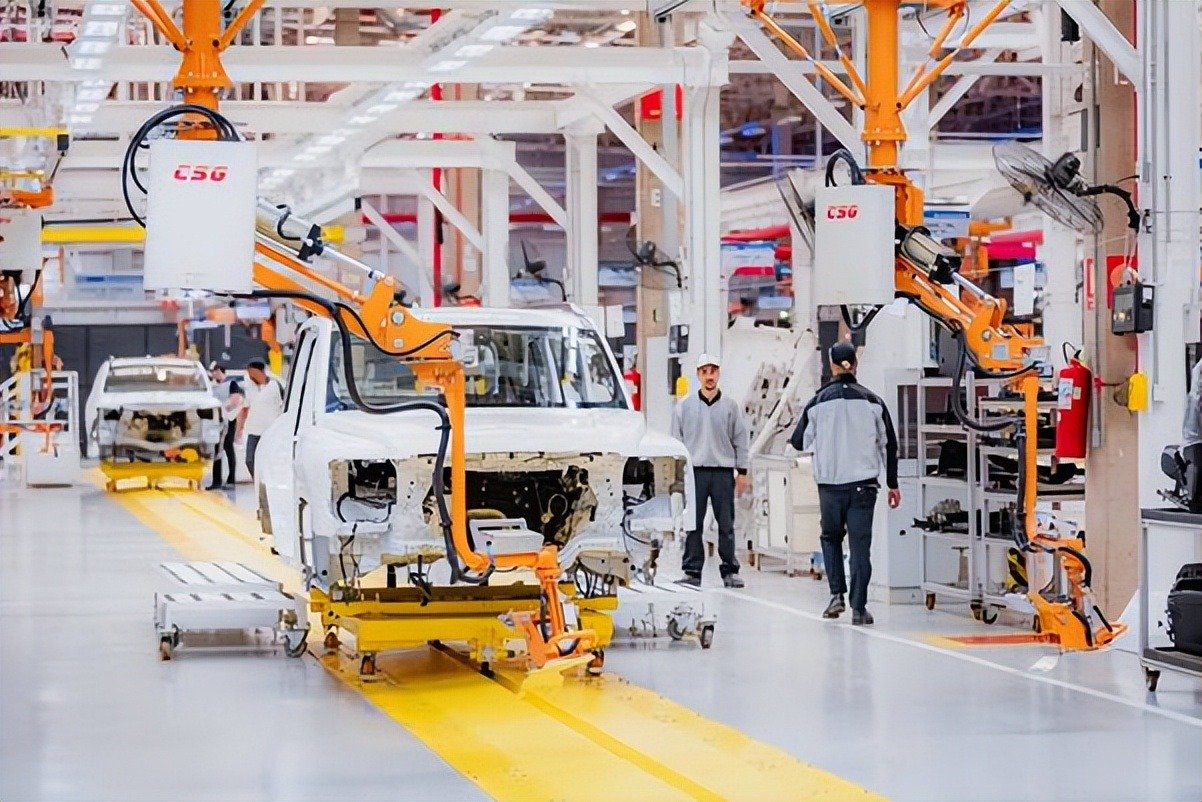
Great Wall Motor's Brazil plant production line
Great Wall Motor's "ecosystem going global" model not only effectively promotes the integration of China-Brazil automotive industry resources and collaborative technological innovation, but also activates local economic vitality by creating jobs and driving industrial chain development, achieving true mutual benefit and win-win outcomes. This model also provides a replicable template for more Chinese automotive brands to achieve high-quality "going global."
In the future, Great Wall Motor will use the Brazil plant as a strategic fulcrum to continuously deepen the "ecosystem going global" model integrating "R&D, production, supply, sales, and service," and accelerate its expansion in the Latin American market. At the same time, leveraging the radiating effect of the Latin American market, the company will further optimize its global market layout. This strategic deepening will not only accelerate Great Wall Motor's globalization process, but also powerfully drive Chinese automotive brands collectively toward global high-value markets, enabling "Intelligent Manufacturing of China" to demonstrate stronger competitiveness on the world stage.