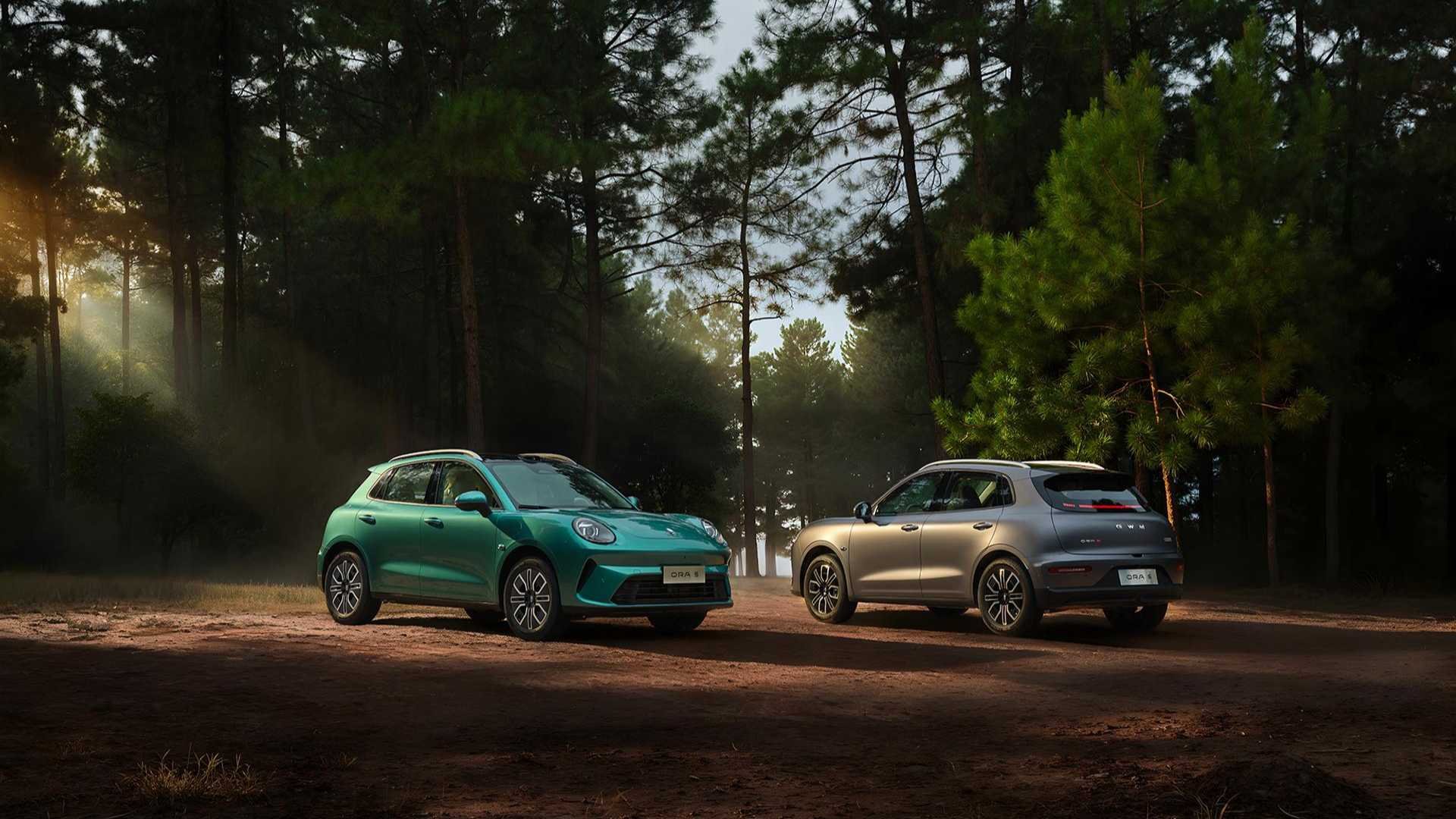
On November 12, Ora, a brand under Great Wall Motors, officially opened pre-sales for its all-new fully electric SUV, the Ora 5, offering a total of 5 models with a pre-sale price range of 109,800 to 142,800 yuan. The new car is positioned as a compact fully electric SUV, focusing on "retro styling + advanced intelligent driving," bringing lidar and full-scenario NOA to the table in the 100,000-yuan price segment. This move is somewhat of a "dimensional strike."
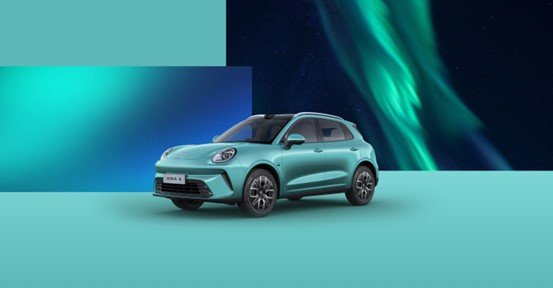
1. How to choose among the pre-sale prices? A quick breakdown of the 5 models
Ora 5 official pre-sale prices
480km Air version: 109,800 yuan
480km Pro version: 119,800 yuan
580km Max version: 129,800 yuan
480km Lidar version: 132,800 yuan
580km Lidar version: 142,800 yuan
From the configuration naming, the approach is roughly clear:
Air / Pro: more focused on "daily commuting + value for money," with 480km range as the foundation;
Max: upgrades the battery to 580km, better catering to long-distance and highway users;
Lidar version: builds advanced intelligent driving on top of range, serving as the "technology calling card" of the entire lineup.
If your main use is city commuting plus the occasional weekend outing, the 480km Pro is basically enough;
if you also need to handle highway business trips or long-distance road trips, the 580km Max is the safer choice;
and users willing to try intelligent driving and with a real need for NOA will clearly set their sights on the two "Lidar versions."
2. Exterior: still that "Good Cat flavor," but more SUV-like
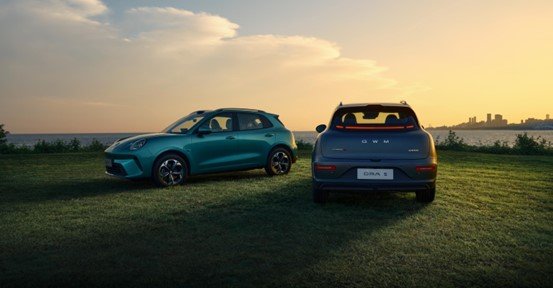
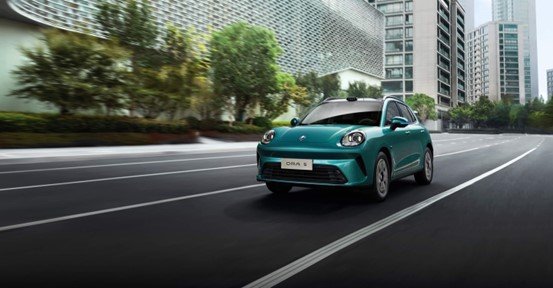
The design of the Ora 5 continues the family style of the Ora Good Cat—
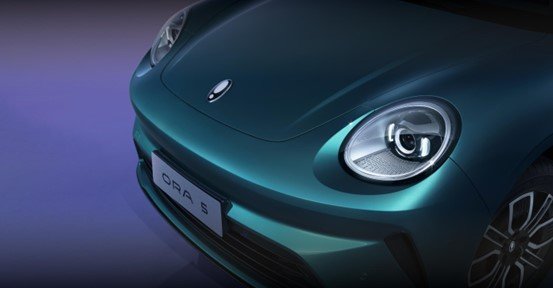
rounded retro body lines, paired with oval retro headlights, make it highly recognizable;
the front face adopts a larger lower grille, with a slightly playful "big mouth" feel;
air vents are added on both sides of the bumper, increasing the sporty atmosphere;
a panoramic glass roof is standard across the lineup, a plus for young family users in both appearance and cabin light.
The rear adopts a minimalist route, with a large-curvature tailgate paired with rounded lines, giving the overall visual proportions a clean and enduring look. The tail badge is standard as GWM, and the official also offers an optional ORA tail badge, which caters to both "brand belonging" and "personalization."
In terms of dimensions:
Length: 4471mm
Width: 1833/1844mm
Height: 1641mm
Wheelbase: 2720mm
Both the wheelbase and vehicle length are at the typical level of a compact SUV, noticeably more like a complete vehicle than traditional small fully electric SUVs, which will positively help rear legroom and trunk capacity. Simply put, it is not an "enlarged Good Cat hatchback," but a product with full SUV stance.
3. Interior: eco-friendly + minimalist, making "good looks" less forced
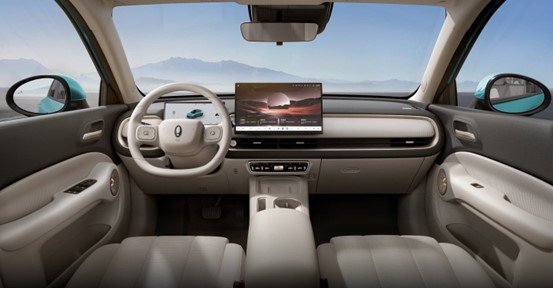
Stepping inside, the overall style of the Ora 5 can be summarized as: "minimalist, gentle, eco-oriented."
Several details are worth mentioning:
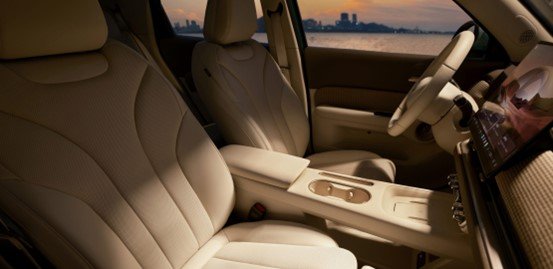
The center console and door panels extensively use woven mesh material wrapping, which feels approachable to the touch and looks more "lived-in" than large areas of piano black trim, while also better fitting the current mainstream eco-friendly trend;
a floating large-size central control screen, paired with a simple physical button layout, reduces visual burden;
the central tunnel adopts a hollowed-out design, balancing practicality and openness, making it handy for daily storage of bags and tissue boxes;
the column-mounted shifter frees up space in the center console and armrest area, looking cleaner and giving off more of an "EV feel";
wireless phone charging is standard, very friendly for daily use.
The overall impression is not flashy or showy, but more like designing the car as a piece of furniture in the home, which will particularly appeal to young women and first-time family users.

4. Infotainment and intelligent driving: third-generation Coffee OS + full-scenario NOA is the Ora 5's killer feature
The Ora 5 is equipped with the third-generation Coffee OS infotainment system and integrates the Coffee Pilot Ultra assisted driving system. In the 100,000-140,000 yuan price range, its intelligent configuration can be said to be one of its core selling points.
In terms of hardware:
equipped with 27 perception hardware components including lidar;
supports full-scenario NOA that does not rely on high-precision maps;
in the parking field, it is claimed to cover more than 200 parking scenarios, while also supporting functions such as cross-floor memory parking.
Translated into user scenarios:
for daily city expressways, elevated roads, and ring-road commuting, more of the lane changes, overtaking, and ramp entering/exiting can be left to NOA;
in multi-level parking lots such as shopping malls and office buildings, the car can "remember" the route itself and autonomously complete cross-floor parking, which will reduce a lot of psychological pressure for beginners and female drivers.
Of course, from an editor's perspective, we should also pour a basin of "rational cold water":
whether the actual experience is good still depends on real-world performance after launch, including takeover frequency, system stability, and ability to handle complex road conditions;
NOA that does not rely on high-precision maps may feel more "free" in experience, but it places very high demands on perception and algorithms, which will also be a key focus of continuous iteration by later OTA and algorithm teams.
But judging from the on-paper configuration plus the pre-sale price, the Ora 5 has indeed pushed a host of fully electric SUVs at the same price point "into exam week" when it comes to intelligent driving.
5. Power and range: 150kW motor + lithium iron phosphate short blade battery
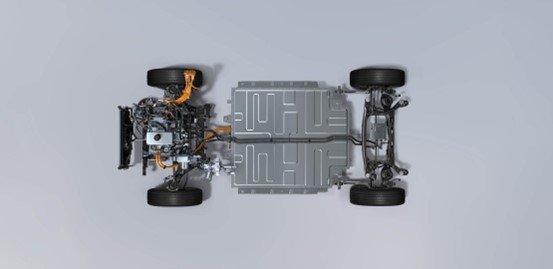
In terms of the powertrain, the Ora 5 lineup is equipped with:
a drive motor with a maximum power of 150kW, sufficient for both daily city and highway use;
a lithium iron phosphate short blade power battery from SVOLT Energy, offering two capacities of 45.3kWh and 58.3kWh, corresponding to 480km and 580km of range.
Several key pieces of information:
150kW front-wheel drive: this power level is "completely sufficient with a little surplus" among compact fully electric SUVs, with no sluggishness in starting, merging, or highway overtaking.
LFP short blade battery: theoretically has advantages in lifespan and safety, while also helping with cost control, which can also explain the Ora 5's competitiveness in pricing.
Two range versions: the 480km version covers the commuting needs of most city users; the 580km version is more aimed at users who have a psychological safety line for range.
In addition, the new car is also equipped with a brake-by-wire system from Fige Technology EAi. On one hand, this kind of configuration helps achieve more refined energy recovery calibration; on the other hand, it also reserves a better "brake control interface" for advanced intelligent driving, making the vehicle's stopping smoother and more controllable under autonomous driving conditions.
6. Looking at it in the market: whose users is the Ora 5 trying to capture?
In the 100,000-150,000 yuan fully electric SUV market, the competitors faced by the Ora 5 include but are not limited to:
compact/small fully electric SUVs focused on space and family attributes;
as well as some models that focus on smart cockpits but are relatively conservative in intelligent driving.
The three cards the Ora 5 clearly wants to play are:
design differentiation: continuing Ora's consistent retro-cute route, emphasizing "emotional value," and avoiding falling into the "all cars look the same" new energy battle;
democratizing intelligent driving: bringing lidar + full-scenario NOA into the 130,000+ yuan range, giving users who are sensitive to new technology but have limited budgets a realistic option;
targeting young urban families: 4471mm vehicle length + 2720mm wheelbase, plus a panoramic glass roof and a relatively gentle interior atmosphere, make it more like a family commuter car that is "used in the city every day, while also accommodating weekend outings."
For the Ora brand, the Ora 5 also has an important mission:
while retaining the aesthetics of the "Good Cat" fan base, further expanding into the more mainstream family car market;
using intelligent driving and a more complete SUV product form to compete against other brands' "sense of technology" and "sense of space" at the same price point.
7. Editor's brief review: strong on-paper strength, but the real experience still needs road testing for verification
From the current information, the Ora 5 has several points worth looking forward to:
The pricing is solid: 109,800-142,800 yuan, bringing range, design, and advanced intelligent driving to a relatively "attractive" balance point;
Looks and temperament are unified: retro rounded exterior + eco-friendly fabric interior, a kind of stress relief for users tired of "mecha-style" aesthetics;
Intelligence has highlights: lidar + full-scenario NOA + cross-floor memory parking, which are genuine selling points at this price.
But at the same time, there are several items that must be focused on in subsequent test drives:
actual range performance and energy consumption levels, especially degradation in northern winters and under congested road conditions;
the smoothness of the Coffee OS infotainment system, voice interaction experience, and compatibility with the phone ecosystem;
the takeover frequency, comfort, and stability of Coffee Pilot Ultra in complex urban road conditions;
chassis quality, noise control, and brake pedal feel, especially whether the overall calibration is natural after adopting brake-by-wire.
If these aspects can also deliver performance matching the on-paper configuration, then the Ora 5 may very likely become **"the fully electric SUV in the 100,000-yuan class that is good-looking, smart, and not too expensive."**


