Recently, the price of gas has really been hurting people's wallets. If you go to a gas station and take a look, 92-octane gasoline has genuinely reached 8.55 yuan per liter (in the Sichuan region). Filling up a 50-liter tank easily costs over 400 yuan, and compared with this time last year, a full tank costs 50 to 60 yuan more, or even 70 to 80 yuan more. Don't underestimate that amount. If you fill up three times a month, that's 200 yuan extra, and over a year that's more than 2,000 yuan, enough to add a major appliance at home or take the kids on two short trips.
For ordinary people like us, what are we really looking for when buying a car? Put plainly, it's practicality. A car is bought to be used, not worshiped. Face is important, but what's underneath matters even more. Mortgage payments, living expenses, and children's costs are already sitting there every month, and if maintaining a car also means feeding a "gas guzzler," then life gets tight. That's why more and more friends have figured it out: when buying a car, fuel economy is king. Nobody wants to drive out and still have to calculate in their head how much every kilometer costs.
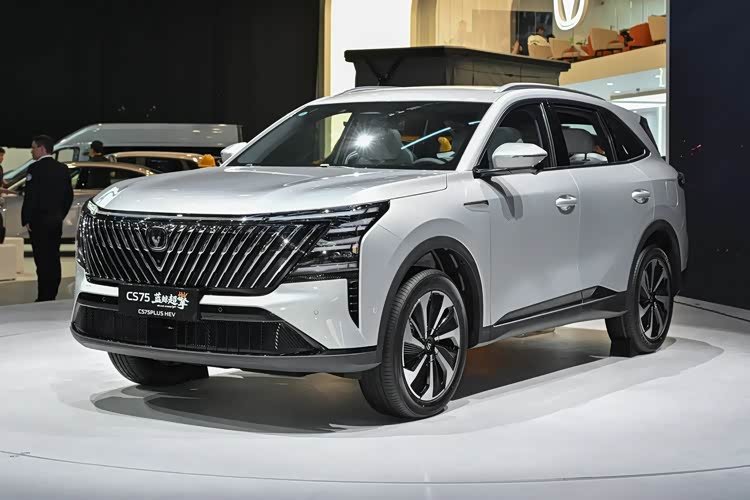
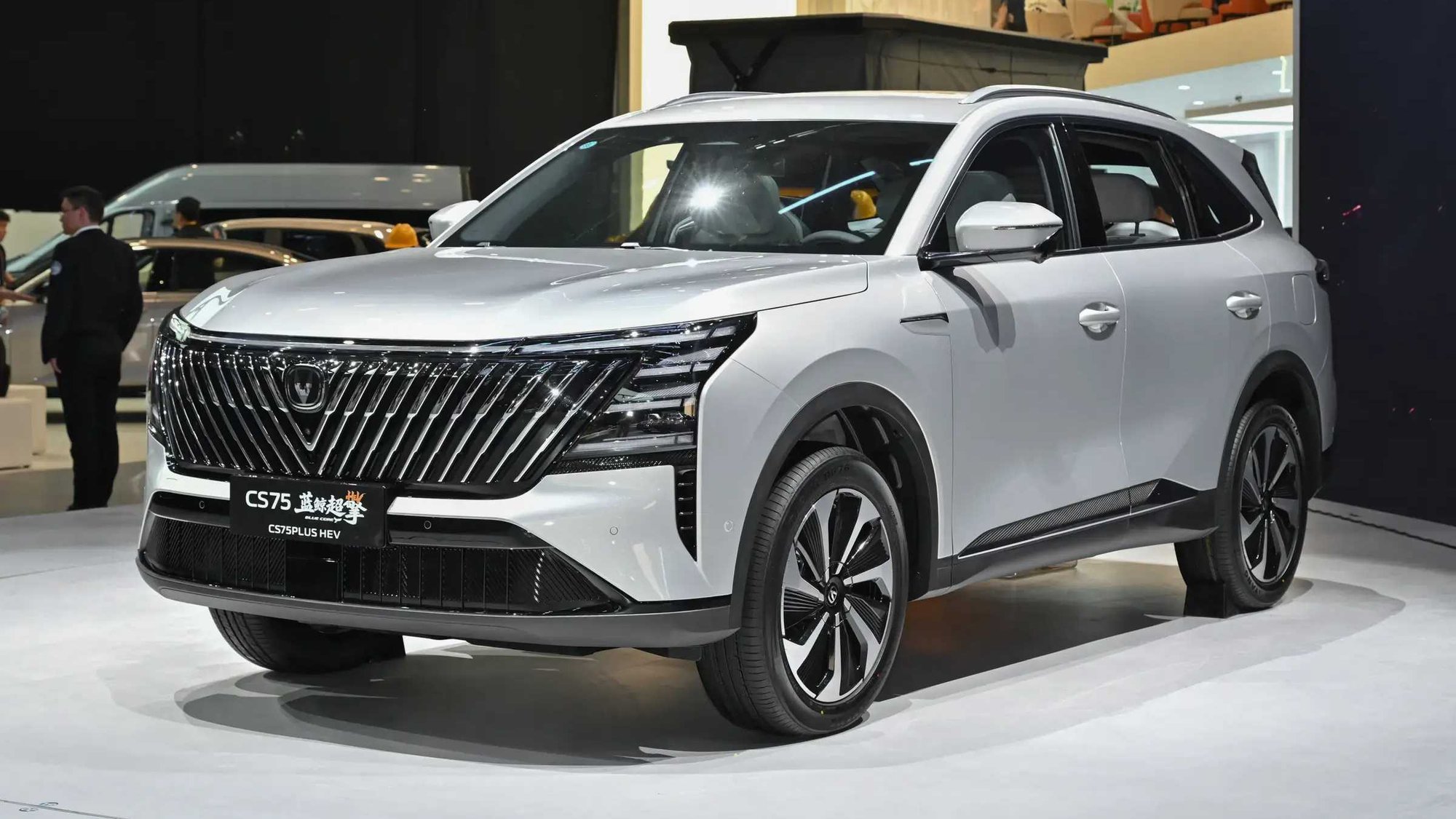
So here's the question: if you want fuel economy, plus a spacious interior, high equipment levels, and not too high a price, is there really such a car? The recently launched Changan fourth-generation CS75PLUS Blue Whale Ultra Engine might be an option worth considering. The key is that it's also a hybrid that doesn't need charging. Let's take a careful look.
Do the math: why it can save you real money
First, look at a set of numbers: this car's WLTC combined fuel consumption is 4.69L per 100 kilometers. But what's more interesting is that under urban conditions, some media outlets measured fuel consumption as low as about 2.3L. Why is it so economical in the city? Because it uses a gasoline-electric hybrid system, and when driving at low speed with frequent stop-and-go, it basically relies on the electric motor to work, while the engine either rests or gently generates electricity in its efficient range.
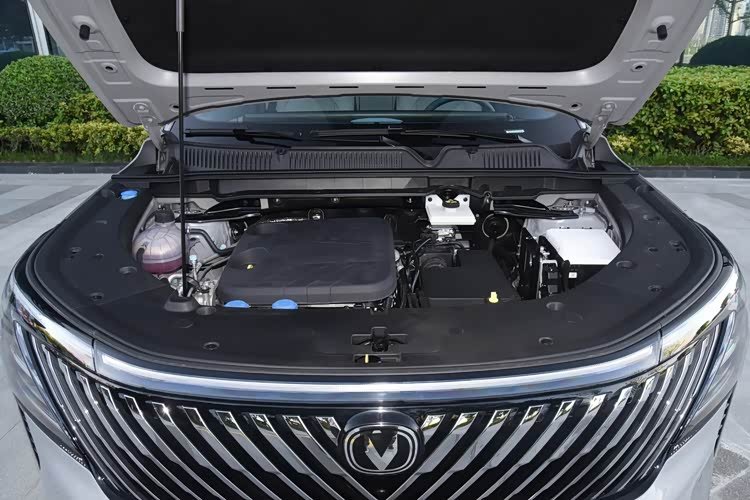
Let's do a real calculation. Compared with a pure gasoline SUV of the same class, city fuel consumption generally has to be 8 to 9 liters, and even if we take the middle value of 8.5L. Now 92-octane gasoline is 8.55 yuan per liter, and driving 15,000 kilometers a year (a normal level for an ordinary family).
Annual fuel cost for a gasoline car:
8.5 liters × 8.55 yuan ÷ 100 kilometers × 15,000 kilometers = 10,901 yuan, so fuel alone costs more than 10,000 yuan a year.
For the Changan CS75PLUS HEV, calculated at a combined fuel consumption of 4.7L (the WLTC combined fuel consumption is 4.69L; here we use a round number for convenience):
4.7 liters × 8.55 yuan ÷ 100 kilometers × 15,000 kilometers = 6,028 yuan.
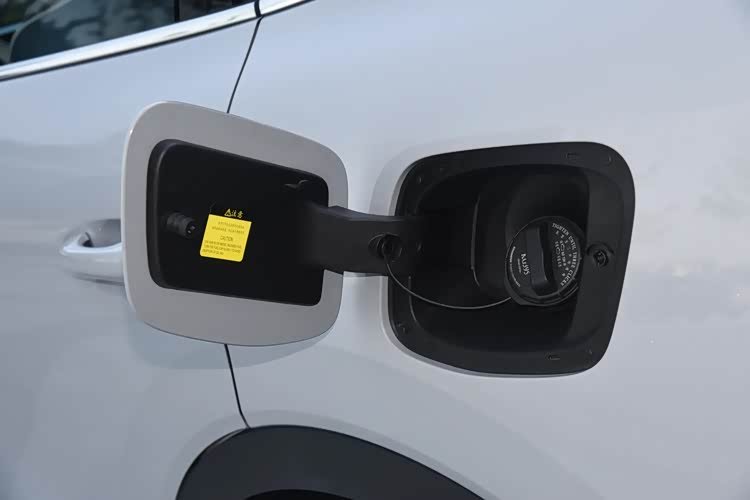
Over a year, you save 4,873 yuan on fuel alone, almost 5,000 yuan. Over five years of driving, that's more than 24,000 yuan saved. And unlike a plug-in hybrid, this car doesn't require you to find a charging station or spend time charging. Just add gas and go, as convenient as a gasoline car, yet its fuel consumption is only a little more than half. For friends who don't have a fixed parking space at home and can't install a charging station, this kind of "no-plug" fuel-saving solution may be more practical than those plug-in hybrids with large batteries. It's only a little over 0.4 yuan per kilometer, so you don't feel anxious when driving.
Fuel-efficient but not sluggish: fully sufficient for family use, and quick off the line
Many people worry: if a hybrid saves fuel, will its power be very "sluggish"? The Changan CS75PLUS Blue Whale Ultra Engine handles this well. It is equipped with a 1.5T engine dedicated to hybrid use, matched with a P1+P3 dual-motor structure. Its characteristic is that when starting and at low speed, it mainly relies on electric motor drive. What are electric motors like? Press and it responds, with no waiting. The official starting response time is 0.3 seconds, and 0 to 60 km/h acceleration takes only 3.85 seconds.
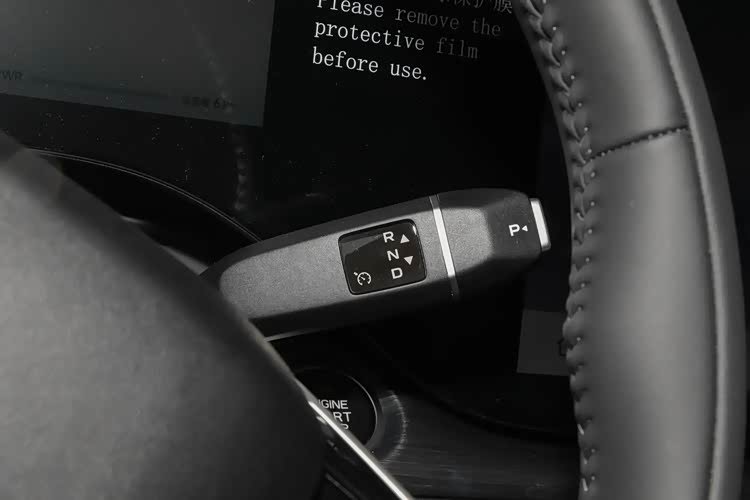
What kind of concept is that? In everyday traffic light starts, you gently tap the accelerator, and the car quietly moves off, so you basically don't have to worry about the car behind honking. And because there is no traditional gearbox, there is absolutely no issue with shift shock, and it drives as smoothly as a pure electric vehicle. Once on the highway, the 1.5T engine intervenes for direct drive, and the power reserve is sufficient. To overtake or merge, just press the accelerator a bit deeper and it's done. For daily family use, city commuting, and weekend outings with family, this powertrain performs quite calmly.
Exterior and interior: face-saving when you drive it out, comfortable when you sit inside
After talking about saving money and being easy to drive, let's look at how this car is designed. After all, you drive it every day, so looking good and sitting comfortably are also important.
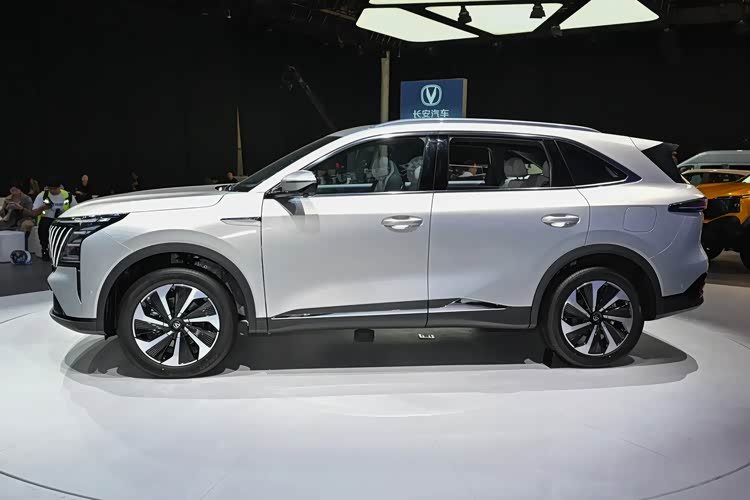
The front face uses Changan's family-style borderless V-shaped grille, with 24 groups of cut units arranged across it, creating a strong visual impact. The through-type LED daytime running lights plus the headlight groups on both sides give it high recognition when lit at night.
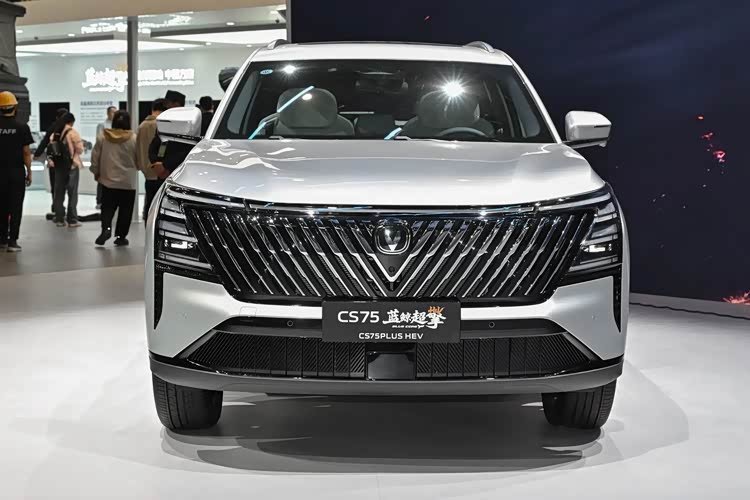
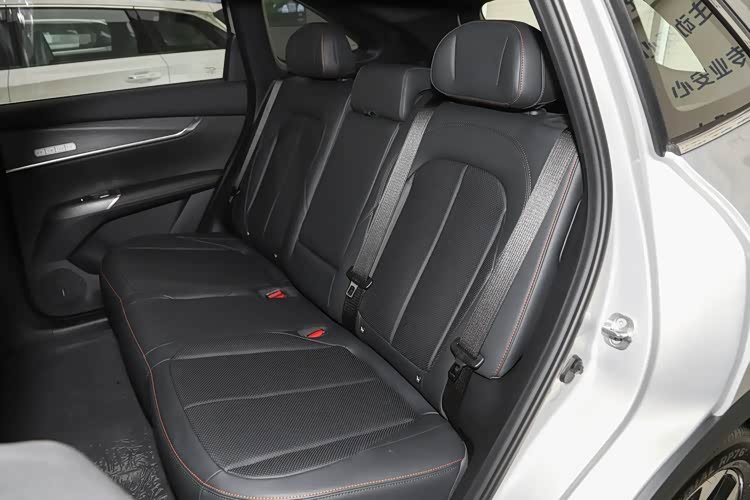
The body dimensions are on the larger side among its class, with length, width, and height of 4770×1910×1705 mm, and a wheelbase reaching 2800 mm. This wheelbase is already close to that of some mid-size SUVs, so rear passenger space is quite generous. With elderly people and children in the family, three people sitting in the back won't feel cramped.
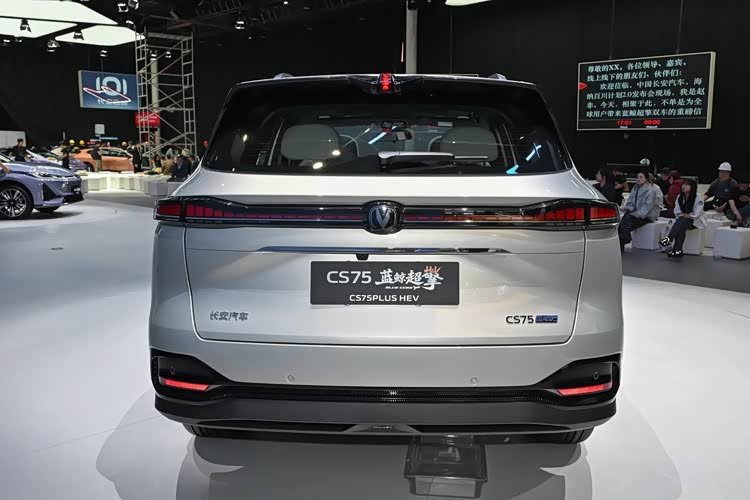
The through-type taillight at the rear has 212 LEDs, and when lit at night its effect is not inferior to cars costing 200,000 to 300,000 yuan. Add the exclusive "HEV" badge, and those in the know can tell at a glance that this is not an ordinary gasoline version.
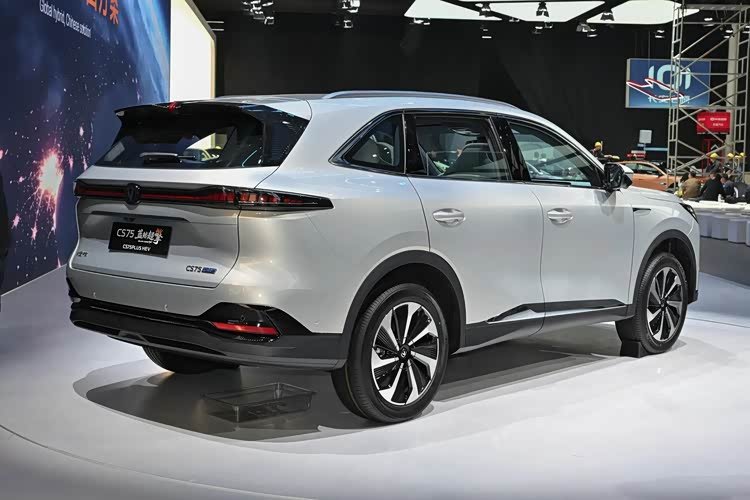
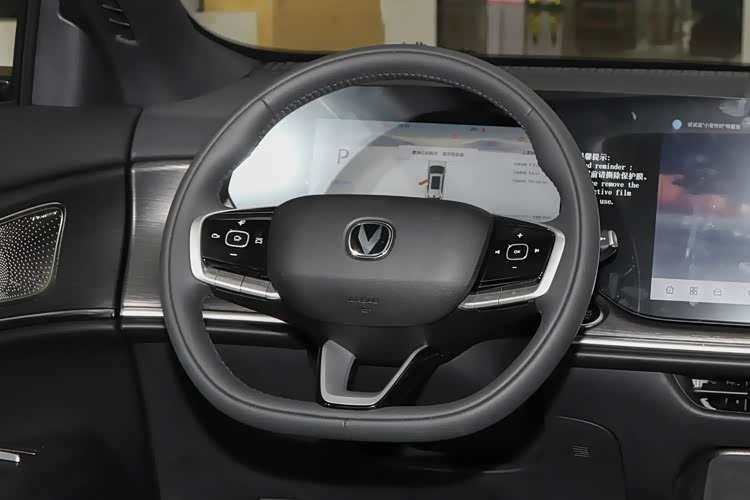
Stepping into the cabin, what stands out is the triple-screen setup: a 10.25-inch instrument panel, a 14.6-inch central control screen, and some models also have a 12.3-inch front passenger entertainment screen. The front passenger screen can independently watch videos and listen to music, so passengers won't get too bored on long trips. The entire center console is wrapped in a large area of soft material, which feels good to the touch. The seats are also relatively wide and thick, with decent support.
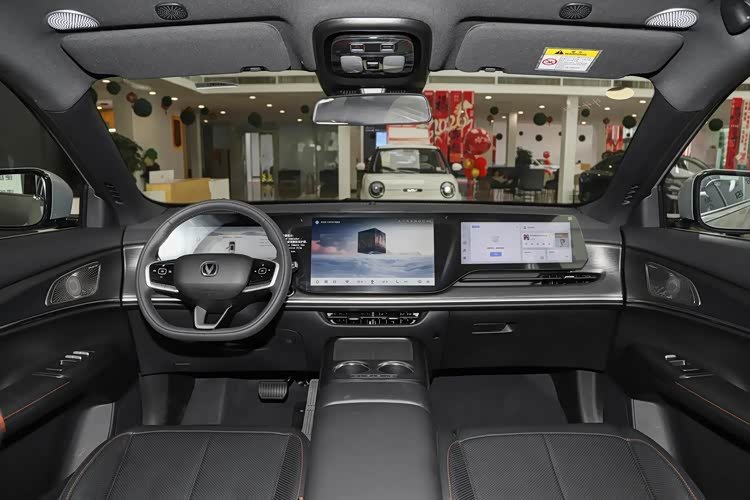
Worth mentioning is the noise insulation. This car uses ANC active noise cancellation technology, combined with 30 noise insulation designs, and interior noise can be controlled to 37 decibels. In actual driving, there is almost no sound at low speed under electric motor drive, and wind noise and tire noise are also fairly well suppressed at high speed. Overall quietness is quite good, and for families with children, a quiet cabin environment is indeed friendlier.
Intelligent features: driver assistance is practical enough, and the infotainment system is smooth without lag
When buying a car now, intelligence is also something many people care about. The Changan CS75PLUS Blue Whale Ultra Engine version is equipped with the Tianshu intelligent assistance system, supporting L2-level driver assistance functions, including full-speed adaptive cruise, lane centering assist, and active braking. These functions are quite practical when driving on highways or urban expressways, helping reduce driving fatigue. Of course, it should be noted that these are all assistance functions, and the driver still needs to stay attentive and cannot fully let go.
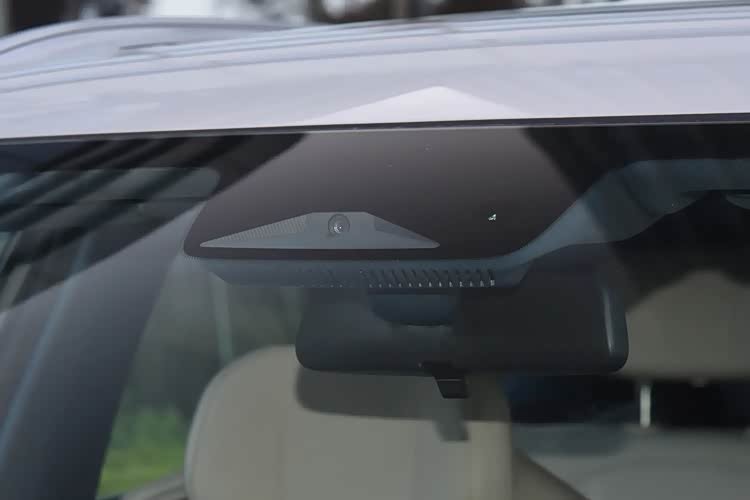
The infotainment system responds quickly, and the voice assistant wakes up fast. Turning the air conditioning on or off, adjusting the temperature, navigation, and playing music can all be done just by speaking. The mobile app can remotely control the vehicle, so you can turn on the air conditioning in advance in summer and warm up the car in advance in winter, making it comfortable as soon as you get in. It supports OTA upgrades, so new functions pushed by the manufacturer later can also be updated in time.

For hybrid models, many people worry about the reliability of the battery and electric motor. Changan has provided some assurances in this regard: this hybrid system has undergone 2 million kilometers of reliability verification, and the first non-commercial owner can enjoy long-term warranty coverage for HEV core components. In other words, at least for the core three-electric system, the manufacturer has given a long-term commitment, so there is no need to worry too much about problems after a few years of use. Of course, the specific warranty terms still need to be checked in the purchase contract details.
Summary: who is it suitable for? Is it worth considering?
Finally, back to the core question: is this car worth buying?
First look at the price: the official guide price is 124,900 to 142,900 yuan, and there is currently a "one-price" promotion starting at 109,900 yuan. Even the top trim is under 150,000 yuan. At this price, you can buy a compact SUV with a 2800 mm wheelbase, a triple-screen setup, a hybrid system, driver assistance, and fuel consumption under 5 liters. Objectively speaking, the cost-performance ratio is indeed good.
Personally, I would recommend these two types of friends pay attention: first, those who don't have charging conditions at home but still want to save fuel. This car doesn't need charging, can be driven just like a gasoline car, yet has much lower fuel consumption. Second, those who drive a fair amount each year, for example with an annual mileage of more than 15,000 kilometers, will find the fuel savings quite considerable after five or six years.
Of course, if you can install a charging station at home and your daily commute is short, then a pure electric or plug-in hybrid may be more suitable for you. If you particularly care about driving pleasure or brand premium, then this car may not be your cup of tea either.
But for most ordinary families, especially users buying the family's first car and needing to balance space, equipment, fuel consumption, and cost-performance, the Changan fourth-generation CS75PLUS Blue Whale Ultra Engine version indeed provides a relatively balanced and pragmatic option. The fuel money saved is real, the sufficient space is real, and the convenience of not needing to charge is also real.
As for whether to buy it in the end, it's still recommended to go to a 4S dealership and take a test drive in person, to feel the smoothness of the powertrain and the noise insulation, and then make a decision. After all, the car is for you to drive, and only you know best whether it suits you.