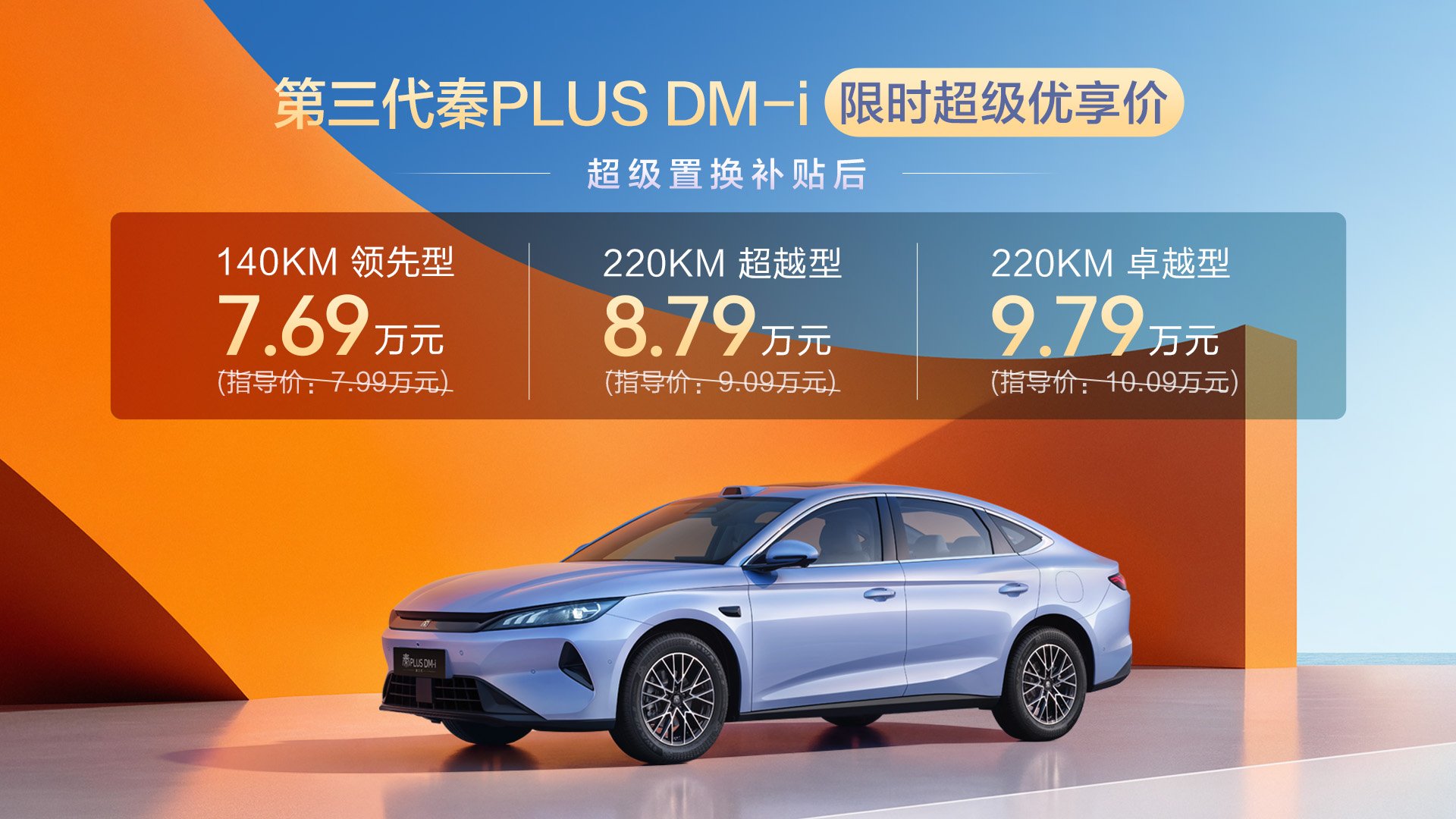
On October 27, the third-generation Qin PLUS DM-i was officially launched. The new car is released in 3 configurations, offering two pure electric range versions of 140 km and 220 km, with an official guide price of 79,900 to 100,900 yuan, and a limited-time super preferential price of 76,900 to 97,900 yuan. As the replacement model of the Qin PLUS, the third-generation model does not stop at patching individual parameters, but carries out a systematic reconstruction around dimensions, design, energy consumption, intelligence, and safety, attempting to redefine the value coordinates of compact family plug-in hybrid sedans with an "all-round advancement" stance.
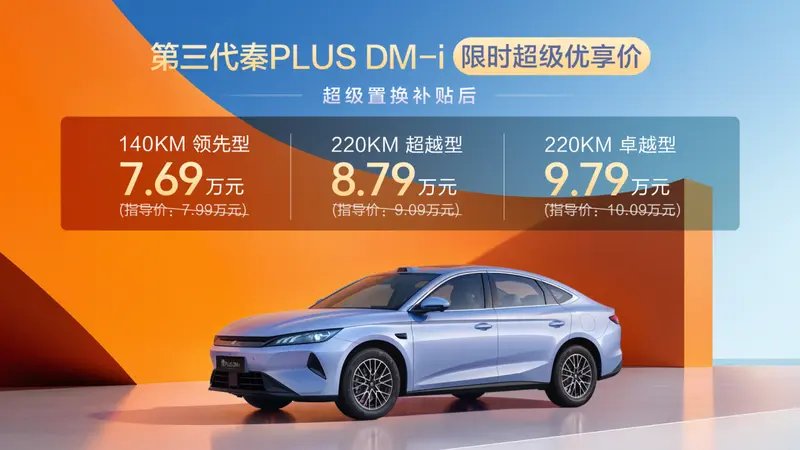
Dimensions comprehensively expanded upward, the spatial boundaries of family sedans redefined
The most intuitive change in the third-generation Qin PLUS DM-i first occurs in its "physique." The new car's length, width, and height reach 4840 mm, 1900 mm, and 1498 mm respectively, with the wheelbase expanded to 2800 mm. Compared with the previous generation, the body length has increased by 60 mm, the width by 63 mm, and the wheelbase by 82 mm. The longitudinal and lateral space of the passenger cabin has been expanded simultaneously, and the overall spatial performance has already entered the territory of traditional mid-size sedans.
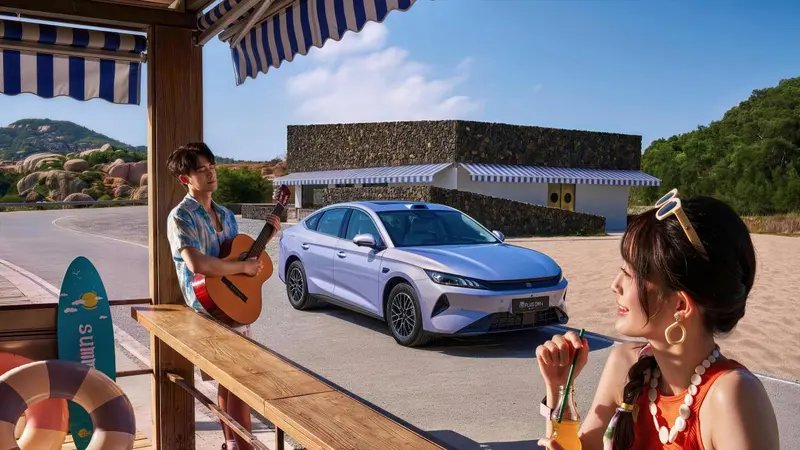
The "largeness" of space is only the starting point; how to let every family member sit comfortably is the real task of a family sedan. The third-generation Qin PLUS DM-i provides seat ventilation and heating in the front row, and the rear seat cushion length has increased by 21 mm, providing more complete support for the thighs and significantly reducing the discomfort of legs hanging in the air during long journeys. In terms of storage, the entire vehicle has 33 storage locations, and the trunk volume reaches 570 L, providing more relaxed room for both miscellaneous items on daily commutes and luggage for family trips.

Design language renewed: from "recognizability" to "expression of texture" The front face of the third-generation Qin PLUS DM-i bids farewell to the signature large-mouth grille of the previous generation and instead adopts a wind-breaking sporty treatment: the shark-nose profile and the air ducts on both sides converge toward the center, paired with sharp light-blade headlights, making the visual center of gravity of the front end lower and the lateral tension stronger. The rear retains the Qin family's recognizable flowing-light auspicious ending taillights, but the overall rear outline is wider and fuller, echoing the minimalist front face.
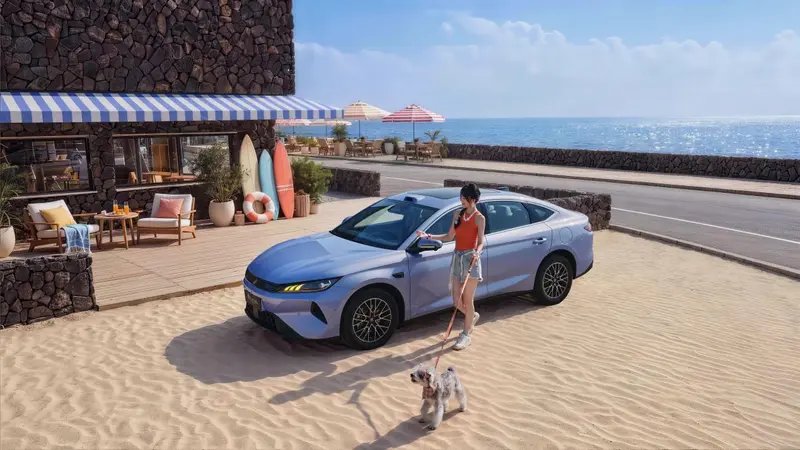
Color and materials are the parts of this round of design upgrading that are easily overlooked but directly affect the daily experience. The new car adds an Island Blue body color, inspired by the clear texture of sea breeze brushing over the water surface, while also offering colors such as Titanium Crystal Gray. The exterior color choices for the entire series have expanded to 9, and Island Blue and Ink Bamboo Green also support two-tone body schemes. The cabin interior offers two color schemes, Cloud Yarn Beige and Ink Smoke Gray. The instrument panel actively avoids piano lacquer that easily retains fingerprints, instead using soft wrapping materials and warm wood-grain trim panels, paired with an 8.8-inch semi-embedded LCD instrument panel, a 12.8-inch central control screen, and a new two-spoke leather steering wheel. The transition between technological configuration and home-like atmosphere is more natural than in the previous generation.

Energy consumption and range: leaving the fuel-consumption anxiety of a "big car" in the past
The comprehensive enlargement of body dimensions is often accompanied by users' concerns about fuel consumption. The response of the third-generation Qin PLUS DM-i is: the NEDC fuel consumption per 100 km in charge-depleting mode has further dropped to 2.58 L, the pure electric range has been increased to a maximum of 220 km, and the comprehensive range with a full tank and full charge reaches 2290 km. Behind these figures is the control strategy optimization of the fifth-generation DM technology. The logic is not complicated: urban commuting should be covered by pure electric power as much as possible, while long-distance travel lets the hybrid system work in the efficient range, making "large size" and "low energy consumption" no longer mutually exclusive.
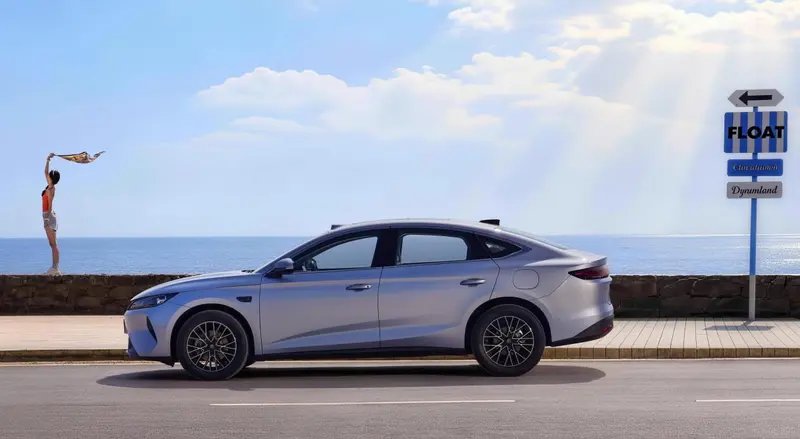
For most family users, a pure electric range of 220 km is already enough to cover several days of daily commuting, while the comprehensive range of 2290 km reduces the frequency of refueling and charging on cross-province long trips to a very low level. One car simultaneously assumes the two roles of "urban pure electric" and "long-distance hybrid," and the structural decline in travel costs is a more practically meaningful upgrade of the third-generation Qin PLUS DM-i beyond the parameters.
Intelligence and safety: configuration democratized, baseline reinforced
At the intelligent level, the third-generation Qin PLUS DM-i is equipped with the high-end version of the DiLink 150 intelligent cockpit. The system UI has been reorganized, and the response logic for daily driving and in-car entertainment scenarios is clearer. In terms of assisted driving, higher-trim models can be optionally equipped with the God's Eye B assisted driving laser version, supporting urban navigation assistance, highway and expressway navigation assistance, and full-scenario intelligent parking functions including get-out-of-car parking. BYD has simultaneously promised to provide one year of urban navigation safety backing for users of the God's Eye series, pushing the boundary of responsibility for intelligent driving one step forward.
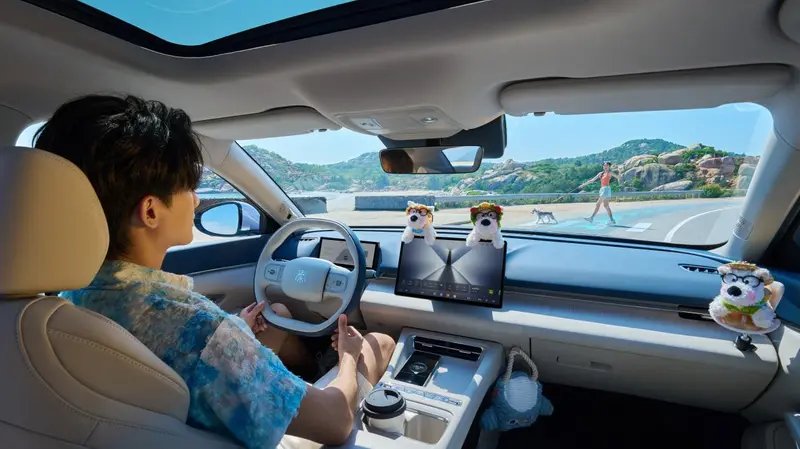
Safety is always the non-negotiable underlying logic of family cars. The third-generation Qin PLUS DM-i is equipped with a high-speed tire blowout auxiliary stability control system, which intervenes in body stability control with millisecond-level response in extreme scenarios such as high-speed tire blowouts. Together with the high-safety Blade Battery and active and passive safety configurations, it forms a protection chain from body structure to driving stability. The addition of library-level NVH quietness and DMS driver fatigue monitoring extends safety from "collision protection" to attention management and the riding environment in daily driving.
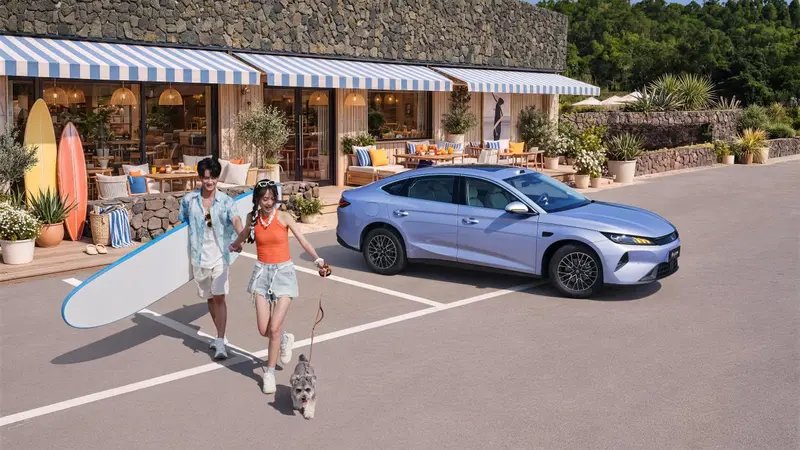
As the sales champion in the compact family sedan market for three consecutive years, the Qin PLUS has accumulated practical usage feedback from more than 1.85 million car owners; as of September 2026, the overall user scale of the Qin family has exceeded 2.9 million. The replacement logic of the third-generation Qin PLUS DM-i is not to use one outstanding strong point to create discussion, but to bring space, energy consumption, design, intelligence, and safety up to the front ranks of the segment one by one, and then hold the threshold down with a limited-time price starting at 76,900 yuan. For consumers who are looking for a family plug-in hybrid sedan that "does not settle," this car is worth verifying in person at an offline store.